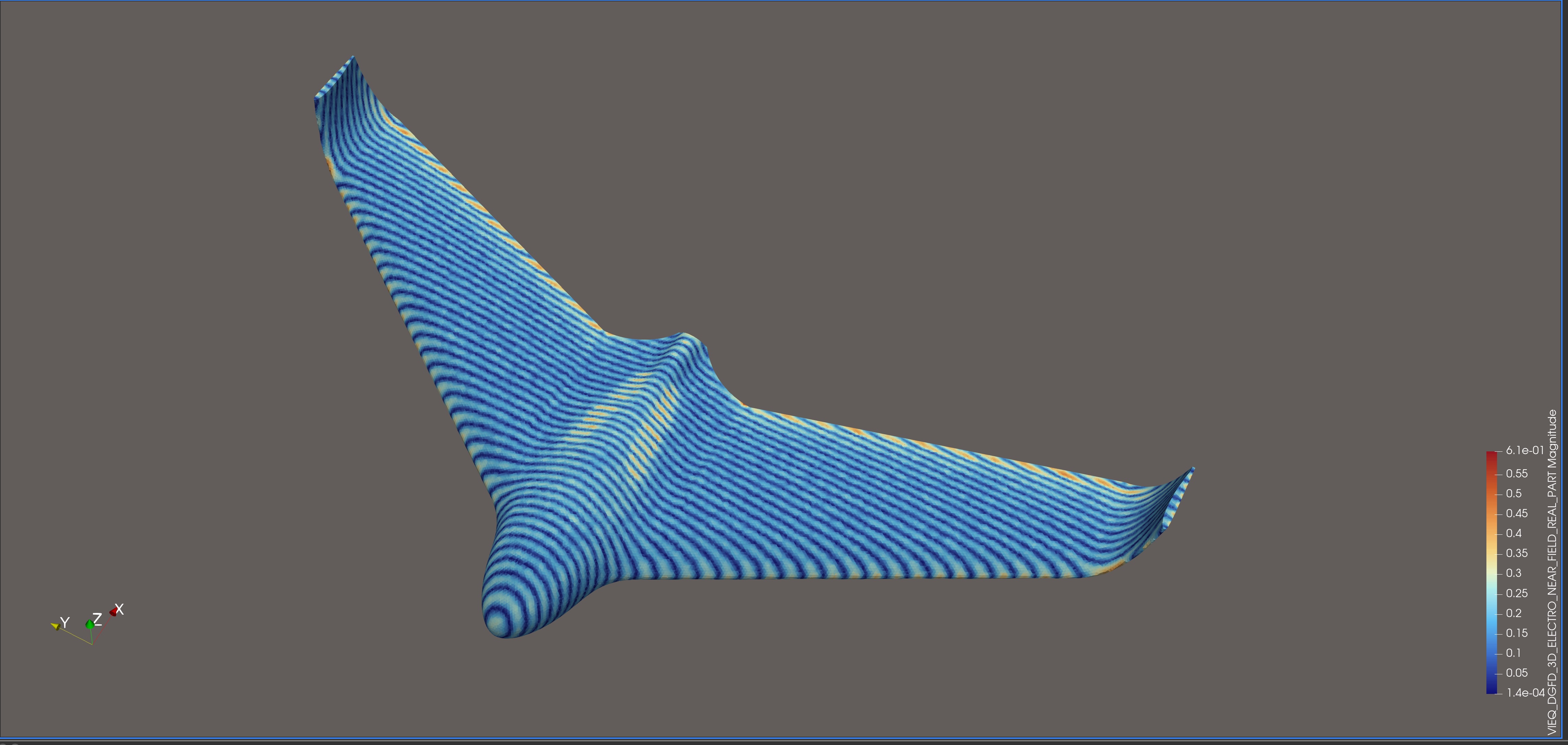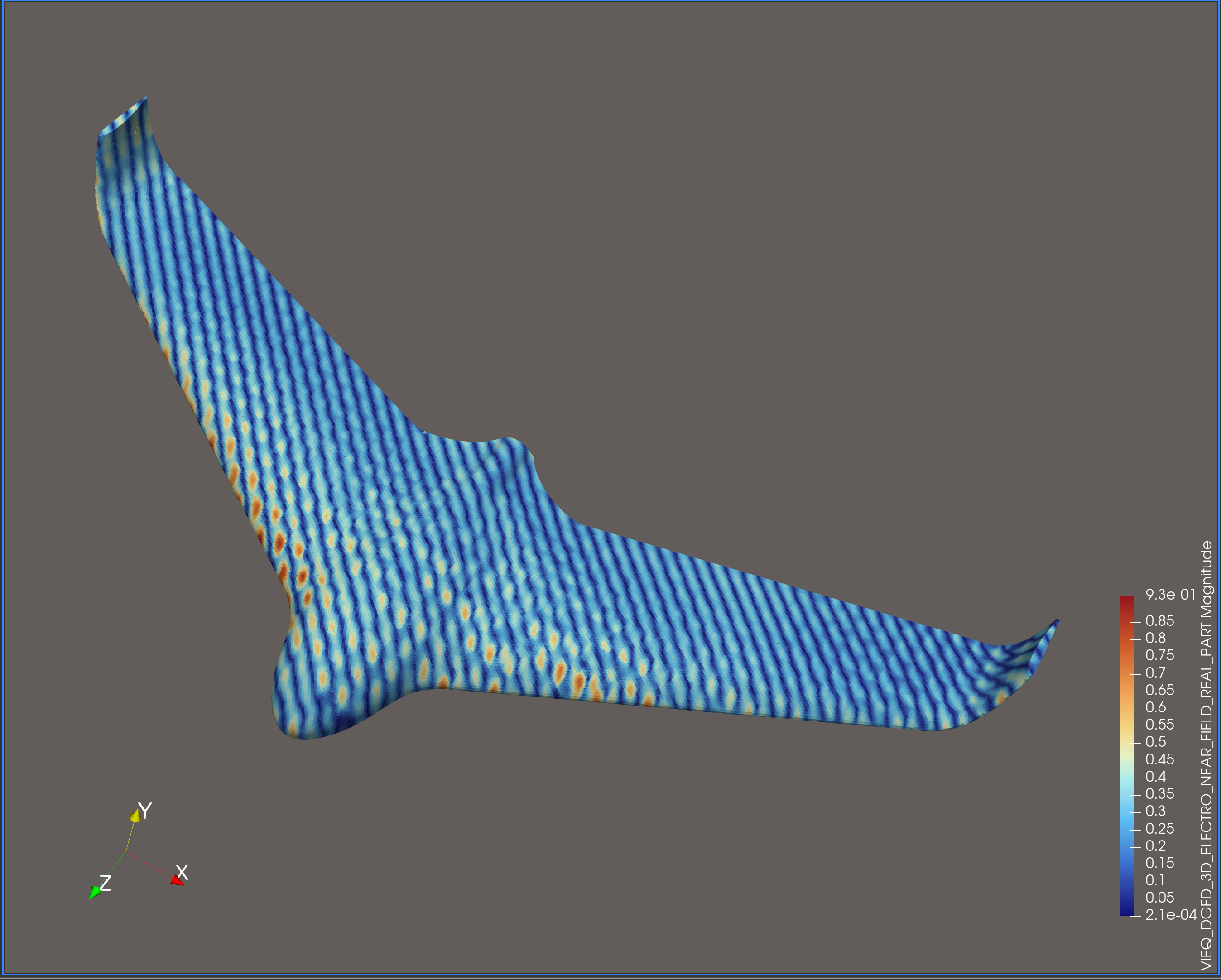
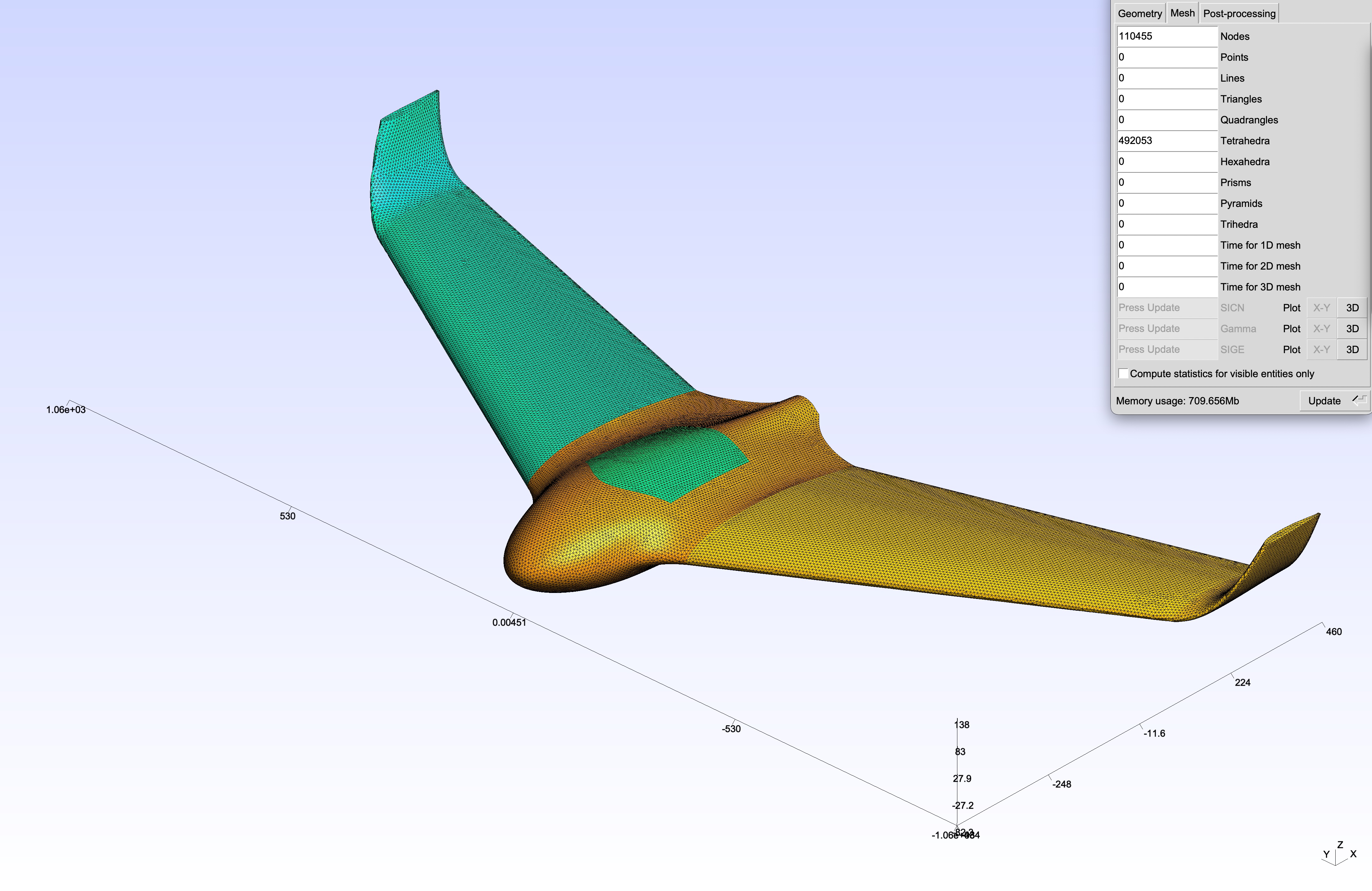
D3D Volume Integral Equation tackles ultra-large electromagnetic problems at a scale simply out of reach for any other solver.
D3D VIEQ solves full-wave, real-world geometries with millions of elements on engineering desktop workstations.
computational electrodynamics - dr. benedikt oswald provides a collection of three distinct computational electrodynamics codes:
computational electrodynamics - dr. benedikt oswald implements a revolutionary, browser-based user interface designed to seamlessly access these codes in the cloud.
This new interface frees the user from heavy, unnecessary clutter—providing the ultimate freedom to focus strictly on what matters electromagnetically.
ELECTROMAGNETIC MANIFESTO - from the molecules of life to the latest communications and measurement technologies our world is built and depends on electromagnetic fields.
For the prosperous future intuitive understanding of all phenomena electrodynamic is vital. Engineers and scientists need new, intuitive tools.
The D3D solver collection provides these tools.
COMPUTATIONAL ELECTRODYNAMICS / FINITE ELEMENT METHOD / DISCONTINUOUS GALERKIN / INTEGRAL EQUATION METHODS / FREQUENCY DOMAIN / TIME DOMAIN / EIGENMODE ANALYSIS / APPROXIMATE CONVOLUTION METHOD / AI ASSISTED, INTUITIVE MESH GENERATION / BASED ON SOLID MODELING KERNEL / DISTRIBUTED MEMORY SPARSE LINEAR SOLVER / ITERATIVE KRYLOV SUBSPACE LINEAR SOLVER / GEOMETRY OPTIMIZATION / BASED ON SOLID MODELING KERNEL / ITERATIVE SOLVER
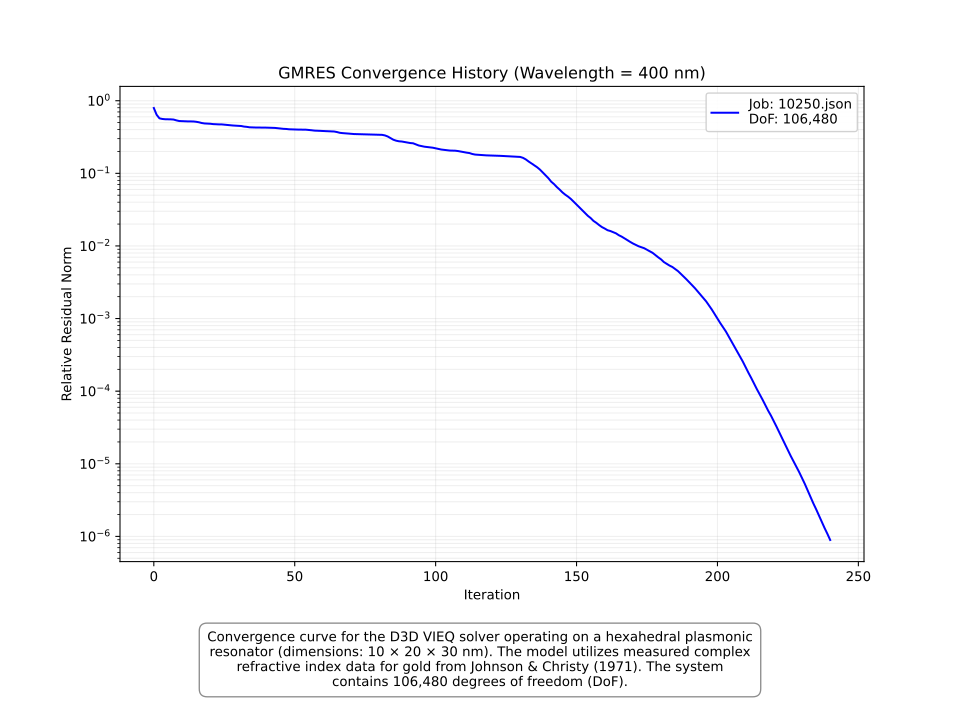
D3D Volume Integral Equation code solves the electric field volume integral equation (VIEQ) in the frequency domain - uses the symmetric interior penalty (SIP) discontinuous Galerkin formulation - employs hierarchical tangential vector finite element (TVFE) basis functions up to 3rd order - implements the approximate convolution method to solve ultra large-scale electromagnetic projects scaling up to millions of elements on moderately sized desktop workstations - uses a ultra-efficient implementation of the GMRES linear solver, thus is extremely memory efficient - is fully parallel via OpenMP - employs GPU acceleration for all numerical tasks where applicable - computes total & scattered electric and magnetic field - computes electromagnetic far field pattern - computes radar cross section (RCS) based on electromagnetic far field.
D3D Discontinuous Galerkin Frequency Domain solves the electric field vector wave equation in the frequency domain with a discontinuous Galerkin method. The D3D DGFD code is currently tested and will be accessible for customers in late 2026, maybe earlier for selected customers. D3D DGFD solves the toughest electrodynamic problems, is parallelized for shared memory server boards and distributed memory cluster computers. D3D DGFD scales from the modest laptop to the ultra-powerful supercomputer.
D3D Continuous Galerkin Time Domain solves the electric field vector wave equation in the time domain with a continuous Galerkin method. The D3D CGTD code is currently tested and will be accessible for customers in late 2026, maybe earlier for selected customers. D3D CGTD solves the largest electrodynamic problems, models dispersive dielectric materials, is parallelized for shared memory server boards and distributed memory cluster super computers. D3D CGTD scales from the modest laptop to the ultra-powerful supercomputer.